PERFORMANCE EXCELLENCE PROCESS
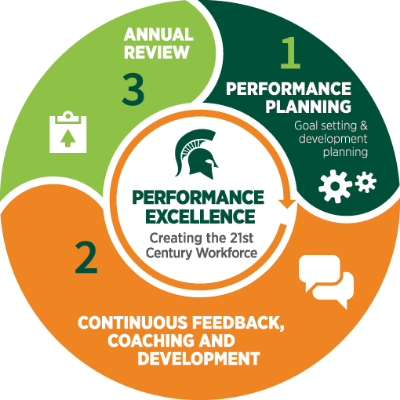
The Performance Excellence process was designed to be a collaborative effort between supervisors and employees to increase communication and development throughout the year. As an employee, use these steps to help you understand what to do during each stage of the process and how to be an active partner in the performance cycle.
Step One: Performance Planning
At the beginning of every cycle, and within 30 days of your Annual Review (Step 3), you will meet with your supervisor to discuss and finalize your goals and development plan for the coming year. To prepare for the discussion, think about goals, skills and development you will need to help:
- Address unit needs for the coming year (tied to departmental strategic goals and university initiatives).
- Demonstrate the university's core values throughout your work.
- Develop your career interests and suggest/implement process improvements.
- Be an active partner and contributor to the mission of the department, college and university.
Tips, Tools and Forms
- Use the Performance Planning Form to help prepare for the discussion.
- Review the Goal Setting Tips and Sample Goals for Different Roles pages.
- Review the Prepare For Your Performance Planning Discussion page.
- Find Learning Opportunities to help you reach your goals.
- Review the questions on the Explore your Learning Needs page to help you create your goals.
Step Two: Continuous Feedback, Coaching and Development
Throughout the performance year, there should be ongoing conversations between you and your supervisor regarding how expectations are being met. These conversations should include regular one on one conversations between employee and supervisor as well as at least one Mid Cycle Check-In (quarterly is recommended). Employees can be active partners in these converstations by preparing in advance and be ready to discuss:
- Recognition for areas in which you are performing well.
- Coaching around areas that need additional improvement or when learning a new skill.
- Progress on goals and development and any needed adjustments or modifications.
- Examples of where the university values have been demonstrated.
- Questions you may have regarding your progress, any needed support.
- Idea sharing regarding changing needs with the unit or your career interests and any suggested process improvements.
Tips, Tools and Forms
- Find tips for Requesting and Accepting Feedback from your supervisor.
- Find Learning Opportunities to help you reach your goals.
New Employees
Your supervisor will schedule an interim or probationary review with you at around six months. It is important that you ask your supervisor for feedback and clarify any questions you have about your position to help assure you are on track.
Step Three: Annual Performance Review
This is the formal assessment of performance over the past year and should be a compilation of the conversations conducted throughout the year, including the Mid Cycle Check-In. This meeting is a two-way discussion which provides an opportunity to review the following:
- performance of responsibilities, contributions and results achieved
- impact of the employee's work on the department, MAU and university mission and strategic priorites
- progress on goals and development, including the demonstration and application of new skills
- alignment with university, MAU and department values, including the demonstration of the values throughout the year
- exchange feedback, share lessons learned, discuss workplace effectiveness, communications, resources
Tips, Tools and Forms
- You may use the Self-Review Worksheet to help you prepare for the Annual Review. Your supervisor may also ask you to send the self review worksheet to them in advance to help inform the Annual Review. This is a great opportunity to share your perspectives on accomplisments and growth.
- Use the Preparing for Your Annual Review page for assistance
Your supervisor will complete the Annual Review form, including your overall performance level for the year. There are four performance levels: Does not Meet Expectations, Developing/Growth Needed, Successful and Exceeds Expectations. Both you and your supervisor must complete and sign the form by or before the due date and send it to MSU HR.
Once the review is completed a new cycle begins. A Performance Planning meeting for the coming year needs to occur within 30 days of the Annual Performance Review due date. Planning meetings that occur outside of this time frame will appear as completed late in any related reporting.